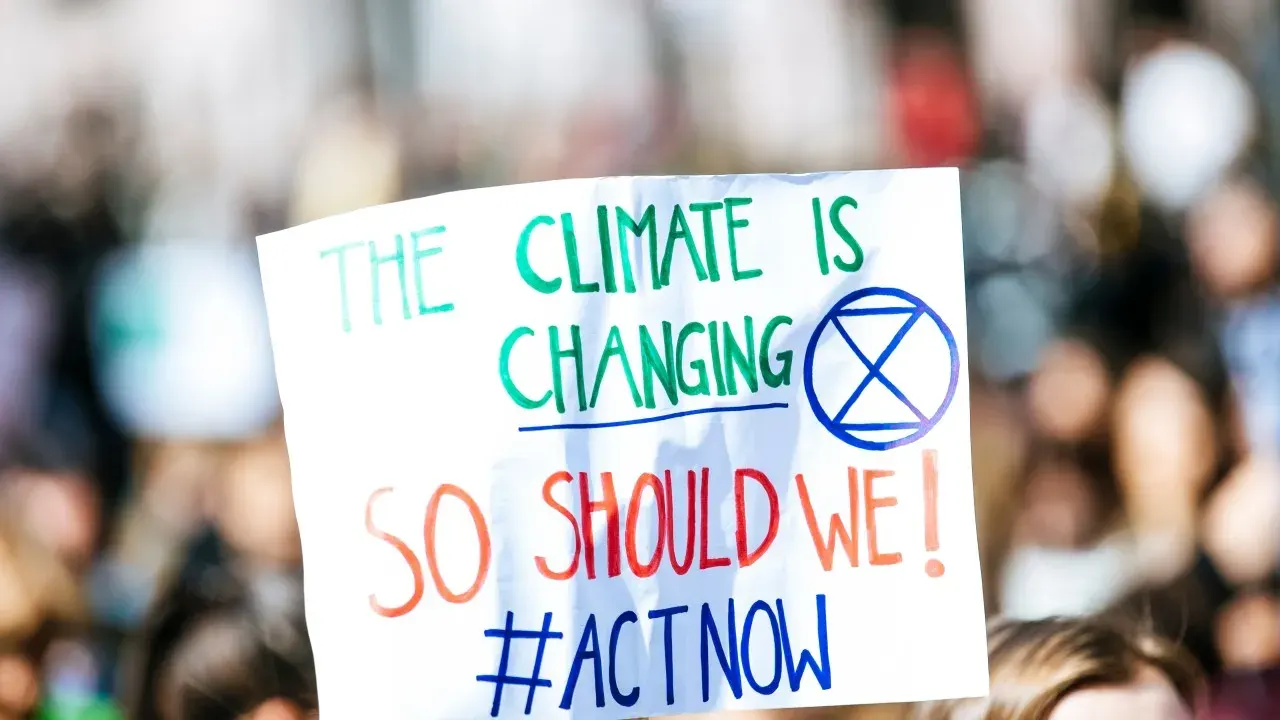
Can solving one environmental problem create another?
Introduction
Climate action is accelerating across industries. Organisations are investing in renewable energy, electrification, low-carbon technologies, carbon removal, resilient infrastructure and new supply chains to reduce emissions and manage climate risks.
But climate solutions do not operate independently of nature. They require land, water, minerals, ecosystems and other natural resources. Some may reduce greenhouse gas emissions while creating pressures elsewhere. A renewable-energy project may reduce emissions but affect habitats. Critical-mineral extraction can support electrification while increasing pressure on water and ecosystems. Carbon-removal projects may support climate objectives but create competing demands for land. This does not mean that climate action should be avoided.
It raises a more difficult question: Can an environmental solution be considered successful if it improves one environmental outcome while creating significant pressure on another?
Situation: When Climate and Nature Objectives Intersect
Climate and nature have often been addressed through separate objectives, metrics and strategies. Climate action has largely focused on reducing greenhouse gas emissions and building resilience to climate change. Nature-related action considers dependencies and impacts on ecosystems, biodiversity and natural resources.
In practice, however, the two are closely connected. A company cannot necessarily expand renewable infrastructure without considering land and biodiversity. A manufacturer cannot scale electrification without considering the minerals, water and ecosystems associated with its supply chain. A company pursuing nature-based carbon removal needs to consider whether the intervention creates additional pressure on land, water or biodiversity.
The relationship can create both synergies and trade-offs. For example, restoring a mangrove ecosystem can support carbon sequestration, coastal resilience, biodiversity and ecosystem services simultaneously. Conversely, some renewable-energy, biofuel or carbon-removal activities can create pressures on ecosystems depending on their location, design and scale. TNFD's guidance on nature in transition plans explicitly identifies such examples of both synergies and trade-offs across climate, nature and social objectives. The question is therefore moving beyond: “Does this project reduce emissions?” towards: “What else changes because of this project?”
Complication: Can One Environmental Benefit Hide Another Environmental Cost?
The difficulty is that climate and nature are not measured in the same way. Some climate-related indicators, particularly greenhouse-gas emissions, can be expressed through a common metric such as tonnes of CO₂ equivalent (tCO₂e). Nature-related impacts are inherently more multidimensional, involving ecosystems, species, land, water and other natural systems.
This makes environmental trade-offs harder to identify and compare. A project may therefore perform strongly against a climate metric while its wider environmental consequences remain less visible.
There is also a question of where the impact occurs. An organisation may reduce its direct emissions while increasing demand for minerals, land or other resources elsewhere in its value chain. The climate benefit is visible in one part of the system, while the environmental pressure may emerge in another geography or ecosystem. This creates a risk of single-objective optimisation: Maximise emissions reduction → Minimise reported climate impact
rather than: Improve climate performance → Assess nature dependencies and impacts → Identify trade-offs → Design the solution accordingly
The challenge is not to find a solution with zero environmental impact. That may not be possible. The challenge is to understand which impacts are created, where they occur, how significant they are and whether they can be avoided, minimised or managed.
Solution: From Single-Objective to Connected Environmental Decision-Making
Organisations need to move from evaluating environmental initiatives through a single lens to assessing their wider dependencies, impacts, risks and opportunities. A practical decision process could consider:
Climate benefit → Nature dependencies → Nature impacts → Resource requirements → Trade-offs → Mitigation → Overall decision
This does not mean that every climate investment must be rejected when a nature impact exists.
Instead, the nature impact becomes part of the decision. The EU Taxonomy provides an established example of this principle through its Do No Significant Harm (DNSH) requirement. An economic activity must make a substantial contribution to at least one environmental objective while also avoiding significant harm to the other relevant environmental objectives and meeting minimum safeguards.
This creates a useful principle for broader sustainability decision-making: A positive contribution to one environmental objective should not automatically be treated as sufficient evidence of overall environmental sustainability.
The appropriate response may be redesigning a project, changing its location, reducing its footprint, introducing safeguards or accepting a managed trade-off where impacts cannot be completely avoided.
The Emerging Shift: From Climate Plans to Climate–Nature Thinking
The market is increasingly reflecting this interconnected approach. TNFD's recommendations explicitly recognise the climate–nature nexus and call for consideration of nature-related dependencies, impacts, risks and opportunities within business strategy, risk management and financial planning.
TNFD has also developed guidance on integrating nature into transition plans and on assessing synergies and trade-offs across sustainability objectives.
The shift towards connected climate–nature thinking is also becoming visible in the ISSB's standard-setting work. In April 2026, the ISSB agreed to develop proposed nature-related disclosures in the form of an IFRS Sustainability Practice Statement, drawing on the TNFD framework and complementing IFRS S1 and IFRS S2. The ISSB is targeting October 2026 for publication of the Exposure Draft for public comment. Its work has also considered how climate- and nature-related risks and opportunities are connected, including potential trade-offs and co-benefits.
The organisation's challenge is increasingly to understand how decisions made to address one sustainability issue may affect another.
What This Means for Organisations
This shift has implications beyond sustainability reporting. Capital allocation, procurement, project development, supply-chain strategy and transition planning may all need to consider climate–nature interactions.
For example: Capital project → Climate benefit → Nature dependency → Potential impact → Risk mitigation → Investment decision
This also requires better information. TNFD's recent work on the nature-data value chain highlights challenges around the discoverability, quality and accessibility of nature-related data. The objective is therefore not simply to create another sustainability metric. It is to enable organisations to ask better questions before decisions are made:
- What environmental objective are we trying to achieve?
- What natural resources or ecosystems does the solution depend upon?
- Could the solution create significant impacts elsewhere?
- Are those impacts temporary, reversible or cumulative?
- Can the project be redesigned to reduce the trade-off?
- How should the remaining risk influence the decision?
Edify Advisory
As sustainability moves from individual environmental topics towards interconnected decision-making, professionals and organisations need the ability to examine climate, nature, resource and business implications together.
Edify Advisory supports applied learning across sustainability areas including climate risk, emissions, nature, double materiality, sustainability reporting, ESG data and sustainable finance. Its focus is on helping professionals understand how sustainability considerations translate into organisational decisions and practical business contexts.
Edify Advisory extends this perspective into organisational practice, supporting businesses and institutions in navigating sustainability-related requirements, implementation, reporting and decision-making. This includes helping organisations assess sustainability considerations in the context of their operations, risks, disclosures and longer-term objectives.
The emphasis across both learning and advisory work is on moving beyond: “Does this solution solve the problem?” towards: “What problem does it solve, what dependencies does it create, and what other impacts need to be considered?”
The next stage of sustainability thinking may not be about choosing between climate and nature. It may be about understanding where climate solutions depend on nature, affect nature and create new risks through those dependencies—and ensuring that these interconnections are reflected in organisational decisions.
Edify Advisory connects sustainability knowledge with practical organisational application: building the understanding professionals need and helping organisations translate that understanding into informed action.
Bibliography
- https://tnfd.global/publication/guidance-on-nature-in-transition-plans/
- https://commission.europa.eu/document/download/993e026c-4118-46ed-b7ff-5224c19aa254_en
- https://www.ifrs.org/news-and-events/updates/issb/2026/issb-update-february-2026/
Originally published on LinkedIn · Cover image: Markus Spiske via Pexels